

Before the establishment of the MPAs, the biggest threats to the waters of Raja Ampat were destructive fishing using dynamite and potassium, as well as overfishing by both Indonesian and foreign vessels, most of which were docked in Sorong Municipality and the surrounding areas.

A joint patrol of police force and Jaga Laut's team caught sharks and ray-finning boats; two protected species in Raja Ampat's waters.
Some of the impacts of those unsustainable uses can still be seen in the rubble in Area III Dampier Strait MPA, Area IV Misool Islands MPA, Area V Kofiau-Boo Islands MPA, Area VI Fam Islands MPA, and Area VII North Misool MPA. It also contributes to the depletion of some fish populations, forcing local fishermen to sail farther from their village's waters.
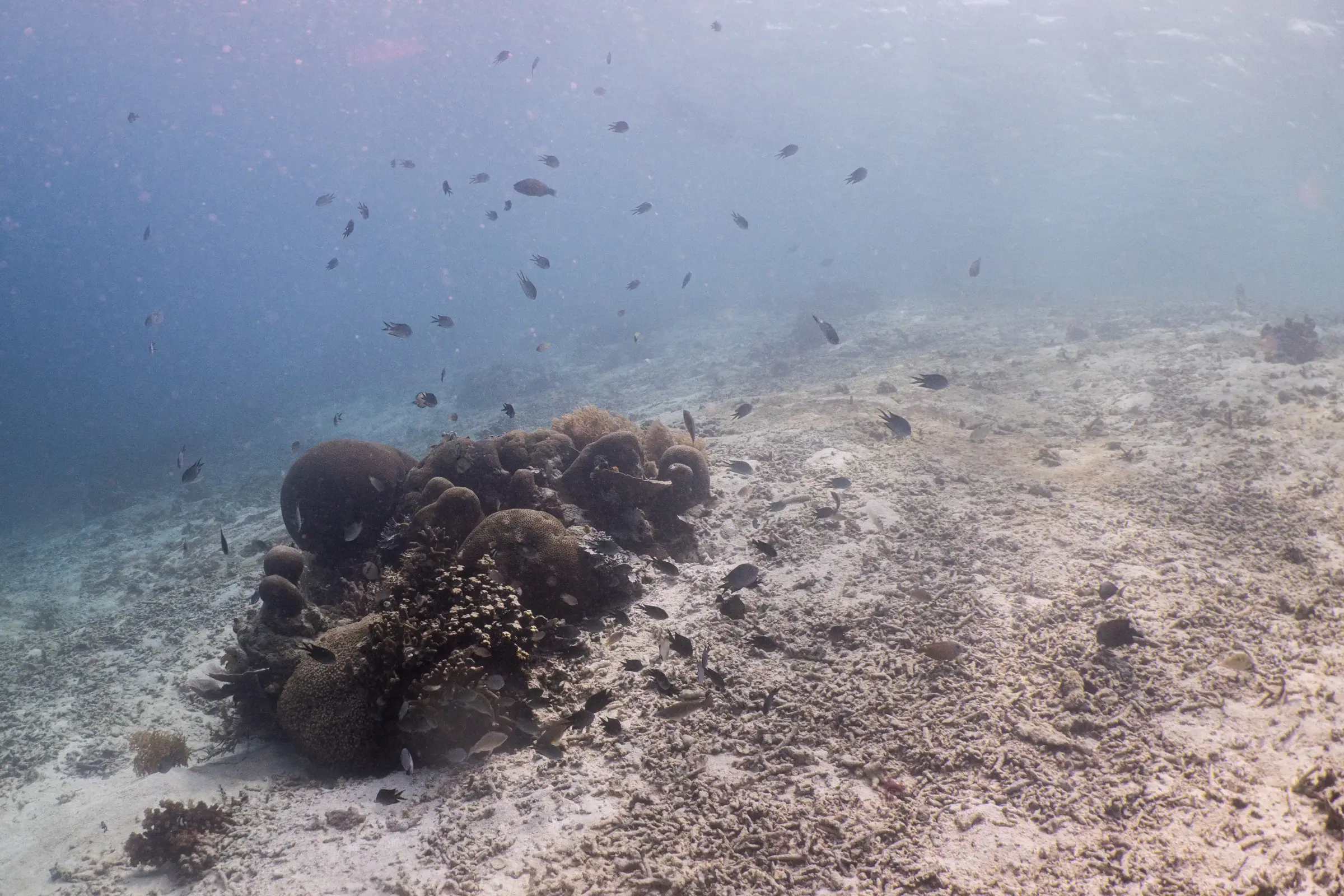
A patch of healthy coral reefs and small fish between seas of rubble.
The existence of MPAs in Raja Ampat's waters have significantly reduced destructive and focal and/or protected species fishing, and limited unsustainable fishing activities to a small amount conducted by a particular type of fishing boat, specifically in Area IV Misool Islands and Area VII North Misool MPAs. Learn about our Jaga Laut surveillance programme.

Jaga Laut is one of our routine services, conducted at least eight times a month in each of our MPAs.
Apart from various fisheries activities, Raja Ampat now faces threats from the growth of the tourism industry, particularly irresponsible tourism practices, issues of overcapacity, destructive behaviours, and the volume and management of waste.
We, as the management authority, realised our shortcomings and limitations in providing solutions to all the issues faced in our MPAs. Therefore, we genuinely expect all the stakeholders, including visitors like you, to participate in making Raja Ampat's sea healthy through sustainable, collaborative management.